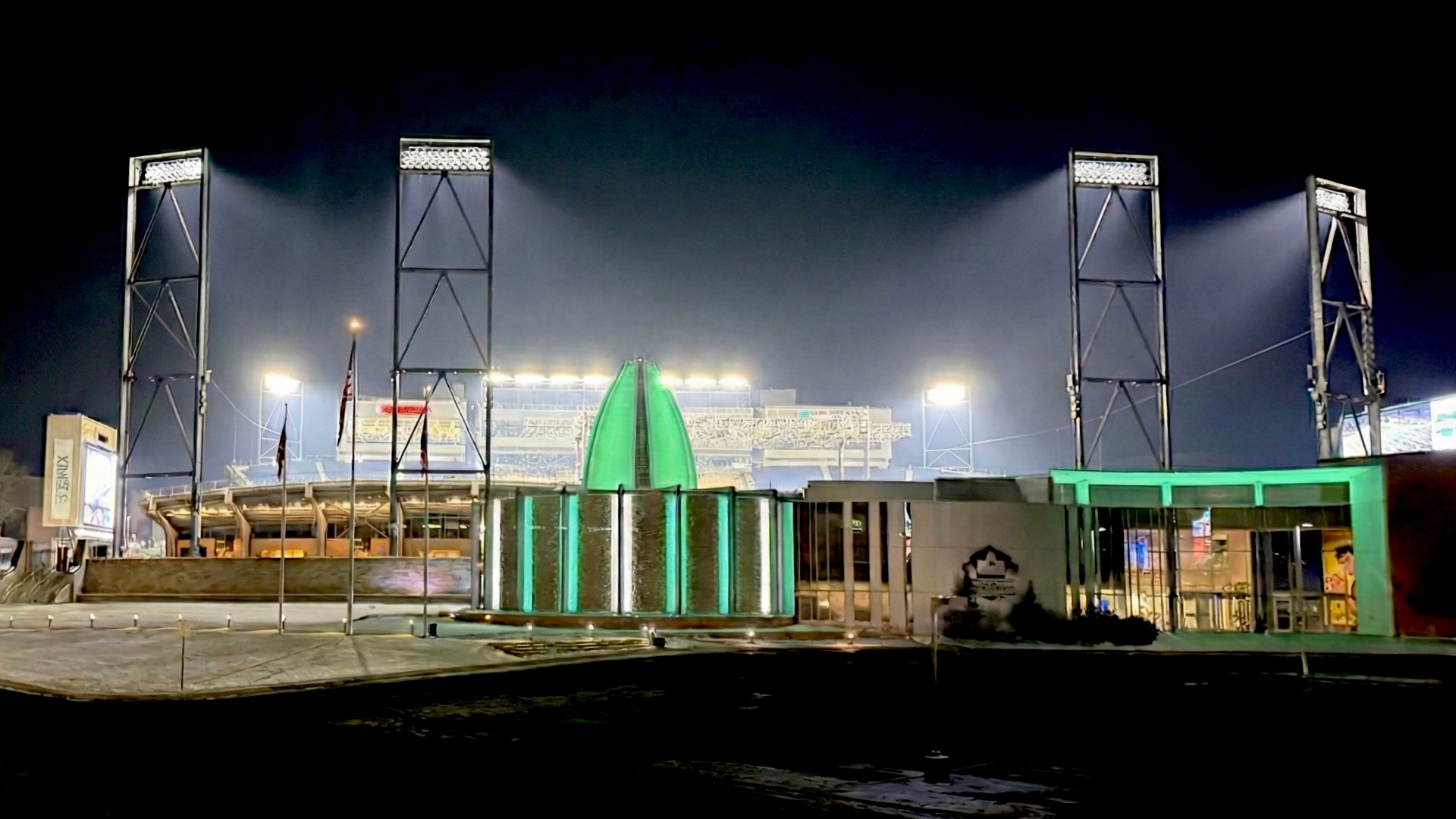
Tom Benson Hall of Fame Stadium in Canton, Ohio under the lights

An Essay · A Framework

The Second Climb

On what a state final loss demands after the lights go out.

The first climb built the season. The second climb builds the man.

The scoreboard ends the game. The standard follows you home.

I know because one sentence from the last practice of my senior year has followed me for 27 years.

01 / The Stage

Canton, Ohio is where high school football stops feeling like a season and starts feeling like a stage.

The lights are different there.

The buses pull in differently. The parents walk in with a different kind of pride. The players look up at the stadium without saying much. They have reached a place most athletes never touch, and they know it before anyone says it out loud.

Inside, it is mostly small sounds. Tape ripping. Cleats on concrete. The slap of a shoulder pad being adjusted. A chinstrap buckled, unbuckled, buckled again. The smell of turf and sweat and liniment. A coach's voice carrying down a hallway. Then, before kickoff, a strange quiet that does not belong to any other game.

By the time a team reaches the state championship game, it has already climbed a mountain.

For a senior, the climb is not only one season. It is four years of lifting and conditioning. Four years of summer heat, winter weight rooms, practices that hurt, film sessions that expose, and coaches demanding the same standard on tired Tuesday afternoons that they demand under Friday night lights. By the final week, every snap is pulling him closer to the end, even if he is trying not to admit it.

The best coaches demand details long before a player understands why the details matter. They hold the line on a Tuesday in October the same way they hold it in a state final. They leave a voice in your head that still challenges you years later, when nobody is watching and no whistle is coming.

Then the playoffs begin, and the climb gets steeper.

Every week, the air changes. The school feels different. Teachers talk about the game. Parents rearrange weekends. Students wear the colors. Younger kids know the players' names in the hallway. Each win gives the season more gravity. Each round makes the team feel less like a roster and more like a shared belief.

By the final week, the players are no longer carrying only themselves.

They are carrying a school. A senior class. A coaching staff. A community. A brotherhood. A story everyone has started to believe in.

That is the first climb.

The visible one.

The one everyone celebrates.

The one that leads to the lights.

And that is why the final whistle can hit so hard. Because when a team loses there, it does not simply lose a game. It reaches the peak completely exhausted, only to discover that the hardest climb has just begun.

This is not an argument that losing is noble. It is not. Winning matters. Preparation matters. Details matter. The scoreboard tells a real truth, and every competitor has to face it. But the scoreboard does not get the final word on what the season built. That part is revealed later, after the crowd is gone, after the locker room empties, and after there is no next opponent to prepare for.
02 / The Other Sideline

One sideline gets release. The other gets replay. Same field. Same clock. Same whistle. Two completely different futures.

Winning Sideline

  • Hugs.
  • Cameras.
  • Trophy shots.
  • Relief.
  • Closure.
  • A story the world knows how to tell.

Runner-Up Sideline

  • Handshake line.
  • Bright locker room.
  • Parents without words.
  • Silent bus ride.
  • Replay.
  • A question nobody can answer for you.

The winning team gets handed the trophy. The losing team gets handed a question: what will you do with what this exposed?

03 / After the Whistle

The Slowest Walk of the Season

The scoreboard freezes. The clock holds at zero. The crowd keeps moving, but for the players on the other sideline, time feels suspended.

Helmets come off and hang from facemasks at the side. Chinstraps swing. Rubber pellets cling to socks and tape. Eyes go to the turf, to the scoreboard, to the other sideline, to nowhere.

Across the field, the other team is already a pile. Cameras find them. A trophy gets lifted. Music starts. It looks like it is happening behind glass.

For a few seconds, maybe longer, nobody on this sideline knows how to move. Because moving means accepting that the season is over. Moving means accepting that the team, exactly as it existed, will never exist again.

Then comes the walk.

Across the field. Through the handshake line that does not feel real. Past parents who are waiting and do not know what to say. Back toward a locker room that will be too bright.

Then the bus. Pads in laps. Phones face down. Streetlights passing in a window. Nobody talks much. Nobody has to.

Somebody eventually says something ordinary, but it does not sound ordinary, because the world the team had been living inside is already gone.

It is the slowest walk of the season. Not because the body is tired, although it is. But because the mind has already started to descend.

Every competitor knows this descent. The brain begins walking backward through the mountain it just climbed. Every play. Every practice. Every rep. Every call. Every what-if.

What if I had taken one better angle? What if we had executed that third down? What if I had finished one more rep in July? What if I let someone down?

Some of those questions are useful. Some are traps. The standard is learning the difference.

The body wants rest. The competitive mind will not allow it.

This is not weakness. This is not self-pity. This is the mind trying to inspect the mountain. A team spends months climbing toward one peak. When it falls short at the top, the competitor's brain immediately climbs back down through the entire journey to understand what happened.

That descent is brutal because it happens when the player has nothing left. No adrenaline. No crowd. No mission for next Friday. Just exhaustion and replay.

That is the part most people never see.

04 / The Rep You Still Remember

One Snap Outlasts the Game

Every player who loses a game like that carries one specific thing longer than the whole game.

A missed angle. A block that ended half a second too soon. A tackle that should have been finished. A call that still echoes. A coach's sentence that lands harder decades later than it did at seventeen.

The full game blurs. The one rep stays sharp.

For me, the rep I still remember did not even happen in the state final.

It happened the day before.

Thursday, December 4, 1998. Last practice. Last game-simulation reps before the biggest game of our lives. I eased up for a split second chasing Nick Linz on a sweep, and Coach Specht caught it instantly.

“Damnit, Doherty — is that how you’re going to finish your last practice as a senior?”

He did not need to say another word.

I knew exactly what he meant.

Finish with intent. Finish with pride. Finish at a level you can live with after the lights go out.

Fortunately, he made us run a few more plays before calling practice to an end.

I did not fully understand it then, but that was the standard being imprinted. Not the stadium. Not the scoreboard. Not the crowd. The standard. The private truth of whether you finished the rep the right way when easing up would have been easier.

That rep is not the enemy. It is information. But information only matters if a player has the courage to face it cleanly. The loss does not make him better. The replay does not make him better. The sadness does not make him better. What matters is whether he can look honestly at what the game revealed, own his part without hiding from it, and demand a better standard afterward.

Accountability says: look at the rep honestly. Name it. Own it. Learn the thing it was trying to teach.

Self-punishment says: become the mistake forever. Carry it as identity. Let one snap rewrite the whole player.

The second climb is where a player learns the difference. Most never get taught it. They figure it out alone, years later, in arenas that have nothing to do with football.

Accountability looks at the rep. Self-punishment becomes it.

05 / Final-Whistle Dislocation

Nobody Prepares a Senior for the Morning After the Last Loss

Nobody prepares a senior for the morning after the last loss.

Not really.

The game ends on Friday night, but the separation begins after that. No practice Monday. No film session with corrections. No next opponent. No whistle. No depth chart. No locker room rhythm pulling everyone back together.

The team still exists in memory, but not in the same form.

That is the part that can be so hard to explain years later. The player is not only carrying the score. He is being separated from the football world that had been holding him together.

For months, and really for years, the structure was clear. Practice. Film. Lifting. Treatment. Meetings. Position groups. Coaches' voices. Locker room routines. The role he played. The standard he was expected to meet.

The season gave him purpose. The team gave him identity. The brotherhood gave him belonging.

Then the whistle blows, and that world disappears almost overnight.

By Monday morning, the school starts moving on. Seniors are no longer preparing for anything together. Juniors become next year's team. Coaches turn toward the future. The locker room is still there, but the world inside it has changed.

That is Final-Whistle Dislocation.

Final-Whistle Dislocation — the sudden separation from the football world that had been holding a player together: the schedule, role, locker room, coaches, teammates, standard, status, routine, and shared mission.

In football language: the season is over, the structure is gone, and now nobody is coming to make you do the work.

06 / Seventeen-Year-Old Tools

Adult-Sized Weight, Adolescent Tools

At seventeen, identity is still under construction. A high school football season gives a young man things adolescence rarely gives all at once: routine, belonging, role, status, purpose, physical discipline, friendship with a shared mission, a standard outside himself.

The team gives a young man a place to stand before he fully knows who he is.

That is why the championship game hits differently. The emotional weight is adult-sized, but the tools are still adolescent. The intensity is real. The public exposure is real. The disappointment is real. The identity collision is real. But the language may not arrive until years later.

The event arrives full strength. The understanding comes later. That delay matters. Because when a player cannot name what happened, he still has to carry it. He may carry it as anger. Silence. Perfectionism. Fear of almost. Private standards. Work ethic. Empathy. Leadership. Or a quiet refusal to stay down when life hits again.

The same moment can become different things in different players. One gets quiet. One gets angry. One replays a single snap for years. One moves on too fast. One never talks about it. One turns it into standards. One turns it into fear. One turns it into fuel.

The team stopped practicing. The mind did not.

That is why the adults around the player matter. Not to soften the loss. Not to explain it away. Not to pretend the scoreboard did not matter. But to help him carry the truth without letting it become either an excuse or a wound.

07 / The Second Climb

What Begins After the Loss

The first climb gets the team to the championship. The second climb begins after the loss.

The First Climb

Public

Witnessed. Scheduled. Roared at.

CrowdLightsAdrenalineNext snap

The Second Climb

Private

Unwitnessed. Unscheduled. Silent.

No crowdNo lightsNo adrenalineNo next snap

The second climb has no practice schedule. No coach blows the whistle. No teammate pulls you through the drill. No crowd rewards the effort. That is why it reveals something different.

The second climb is the internal climb back toward meaning. It is where the player has to sort through what happened without pretending the loss did not matter and without letting the loss destroy the value of everything that came before it. It is where he learns the difference between accountability and self-punishment.

Pain is not proof of failure. It is proof of investment. But investment does not excuse the result. It demands a response.

The scoreboard can end a game, but it cannot measure what the journey built.

The second climb is where identity gets rewritten. Not all at once. Not in a speech. Slowly. In the quiet. In the first time life does not reward effort the way he thought it would. In the first hard conversation. In the first setback. In the first private moment where there is no coach, no whistle, and no crowd — only the standard.

That is when he realizes he has been near this shape before. Giving everything. Falling short. Sitting in the silence. Deciding what to build next.

08 / The Standard Imprint

What Gets Built Afterward

The loss does not make a player better by itself. That is too simple. What matters is what gets built afterward.

A standard is not a feeling. It is not something a player says when the lights are on and the room is emotional. A standard is what remains when no one is watching, no one is checking, no one is clapping, and doing it right would be easier to skip.

Somewhere in the second climb, a standard gets imprinted. Not the coach's standard. Not the school's standard. Not the crowd's standard. A personal one.

A player begins to understand what he will demand of himself when no one is watching. How he will respond when the outcome does not match the effort. Whether he will avoid the next mountain or climb it with more honesty.

That standard can shape a life. It can show up years later in work, marriage, fatherhood, leadership, faith, friendship, fitness, and the private moments where a man either keeps his word to himself or does not.

For me, that voice has shown up far beyond football. In triathlons when my legs were gone. In pressure moments at work. In private moments where the choice was to coast or to push and only I knew the truth. The arena changed, but the question stayed the same: is that how you are going to finish?

The next games do not always have scoreboards. Sometimes the next game is a business setback. Sometimes it is a relationship that needs repair. Sometimes it is fatherhood and the weight of showing up tired. Sometimes it is the private moment where a man either keeps the standard or lets it slide.

The arena changes. The pattern remains. A young player who has walked through Final-Whistle Dislocation may not know the language for it yet, but he knows the shape. The climb. The peak. The fall. The replay. The silence. The decision. The rise.

09 / The Stadium as the Prize

The Lights Were Earned

There is another truth that takes longer to see.

The stadium was not a consolation prize. A competitor does not ride to Canton hoping to collect a memory. He goes there to win.

The loss still mattered.

But years later, he can tell the difference between pretending the loss did not hurt and recognizing that the climb was real.

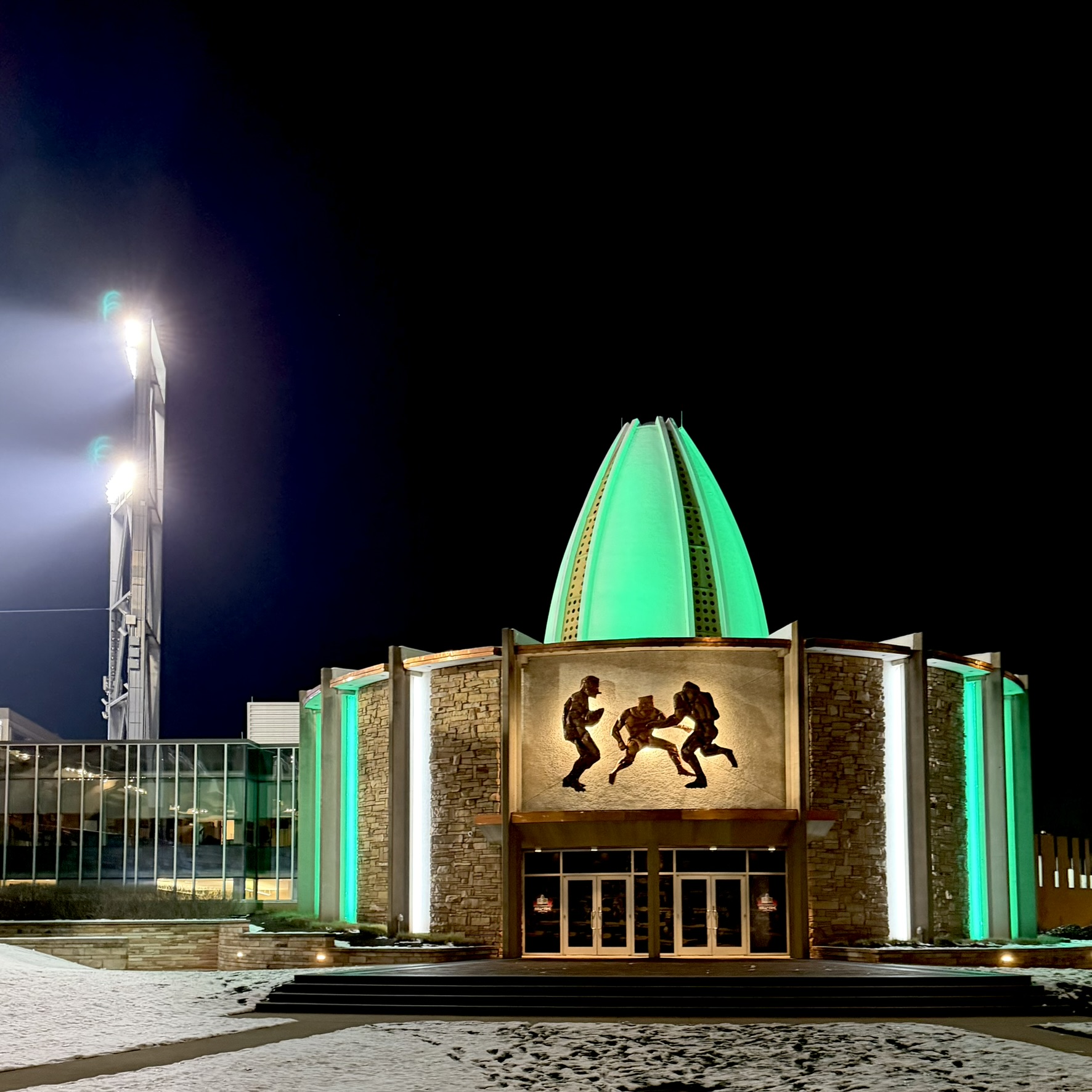
The Pro Football Hall of Fame in Canton, Ohio, lit at night
Canton, Ohio — under the lights.

The lights. The walk in. The history of Canton. The Pro Football Hall of Fame rising in the dark. That stage is not given to ordinary teams. It is earned by teams that climb farther than almost everyone else.

Under those lights, the journey becomes visible.

Every summer rep. Every cold practice. Every film correction. Every coach's demand. Every teammate who pushed, lifted, challenged, and believed.

The lights do not only shine on the final score. They shine on what it took to get there.

That can be hard to accept in the days after. It may even be hard to look at a picture of the stadium. But over time, the image can change.

It can stop being only a reminder of the ending and become a reminder of the climb.

Not because losing was enough.

Because the team earned the right to stand there.

Because the standard demanded by that journey did not disappear with the result.

The stadium itself was part of the prize. Not the whole prize. Not a replacement for winning. But proof that the climb was real.

Tom Benson Hall of Fame Stadium in Canton, Ohio, lit at night with the Hall of Fame entrance in the foreground
Tom Benson Hall of Fame Stadium — the walk in.

Coda

There Should Be a Name for This

The final whistle ended the game. It did not end what the losing team had to carry.

That is why this essay reaches for two phrases.

Final-Whistle Dislocation — the sudden separation from the structure, identity, brotherhood, routine, status, and purpose that held the player through the season.

The Second Climb — the invisible climb afterward, where the player rebuilds meaning, carries the standard, and begins becoming someone new.

Together, they describe the part of sports we rarely study.

The part after the lights.

The part after the bus ride.

The part after the world moves on.

The part where the player keeps climbing.

The second climb is not self-pity. It is the work of carrying the standard forward after the crowd is gone.

The first climb was public.

The second climb is private.

The first had coaches, teammates, whistles, lights.

The second has no schedule, no crowd, no next opponent.

The first climb built the season.

The second climb builds the man.

The loss did not make him better.
What he built after it did.